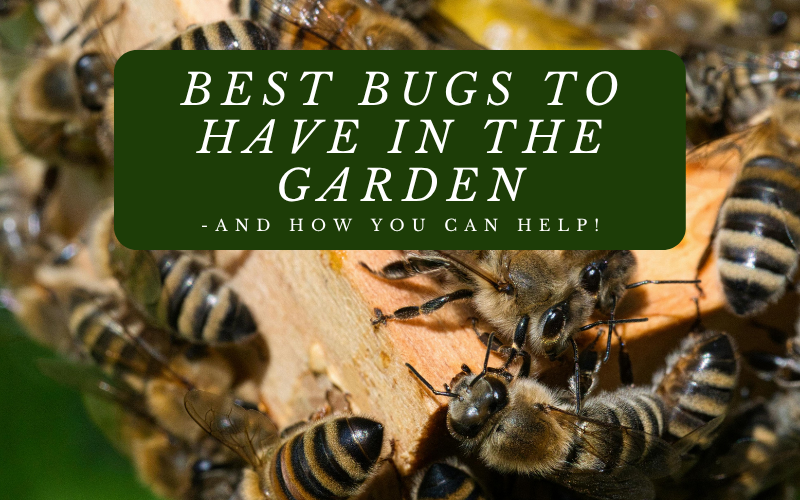
Last post we talked about the bugs that we should try to keep out of our garden. This post we are going to go over some of the bugs that we should try to attract to our garden. Some insects are actually beneficial to the garden and bring many positive changes that can help the overall state of your garden. When we think of a garden there are three categories of “good” insects that we can think of: pollinators, predators, and parasitizers (or parasites).
Pollinators – Insects responsible for pollinating the garden. Examples: Bees, flies, beetles, moths, butterflies, and even vertebrates like bats and birds.
Predators – The “guards” of the garden, they get rids of the pests that we discuss last week. Examples: ladybugs, lacewings, and spiders that prey on other insects, helping to control pests.
Parasitizers – “Battle” insects, they kill pests by laying their eggs on or in a host. Example: parasitic wasps
Now we need to dissect what are the necessary things things that we need to do to attract these insects. Similar to all living things, these beneficial insects need the essentials are food (i.e pollen and nectar), water, and shelter.
For food, diversity is key. Making sure that you plant different different types of flowers and plants that insects enjoy. Research native plants to your area to attract native species of insects. If possible try to make sure you always have something in bloom in your garden. That way you have a consistent stream of pollinators in your space until it is time for winters. In spring, try your hand at early bloomers, summer with stalwarts (plants that can take really challenging conditions with little care), and in the fall some autumn flowers.
Now water, is simple but necessary. Try to place shallow dishes near your plants that are deep enough so that the water doesn’t evaporate throughout the day but shallow enough where you would need to replenish and replace the water daily.
So shelter can look like a lot of different things and don’t have to be an extravagant set up. This places give insects a place to rest, lay eggs, and hide from predators. These little places can look like corners in your greenhouse or patio that may not fit the picture perfect painting (try saying that 5 times fast 🙂 ) but are perfect places for these insects to protect themselves. Even if you plan for companion planting in your garden, this allows for layers to occur and more spaces for shade and cover for these insects.
For now, though, I hope you have some knowledge as to what to look out for and the types of insects to invite into your garden! Remember that that these insects will have a positive impact on not only your plants but the overall health of your garden when given the basic things that the need!
Until next time, as always, Plant with a Purpose! – BTR